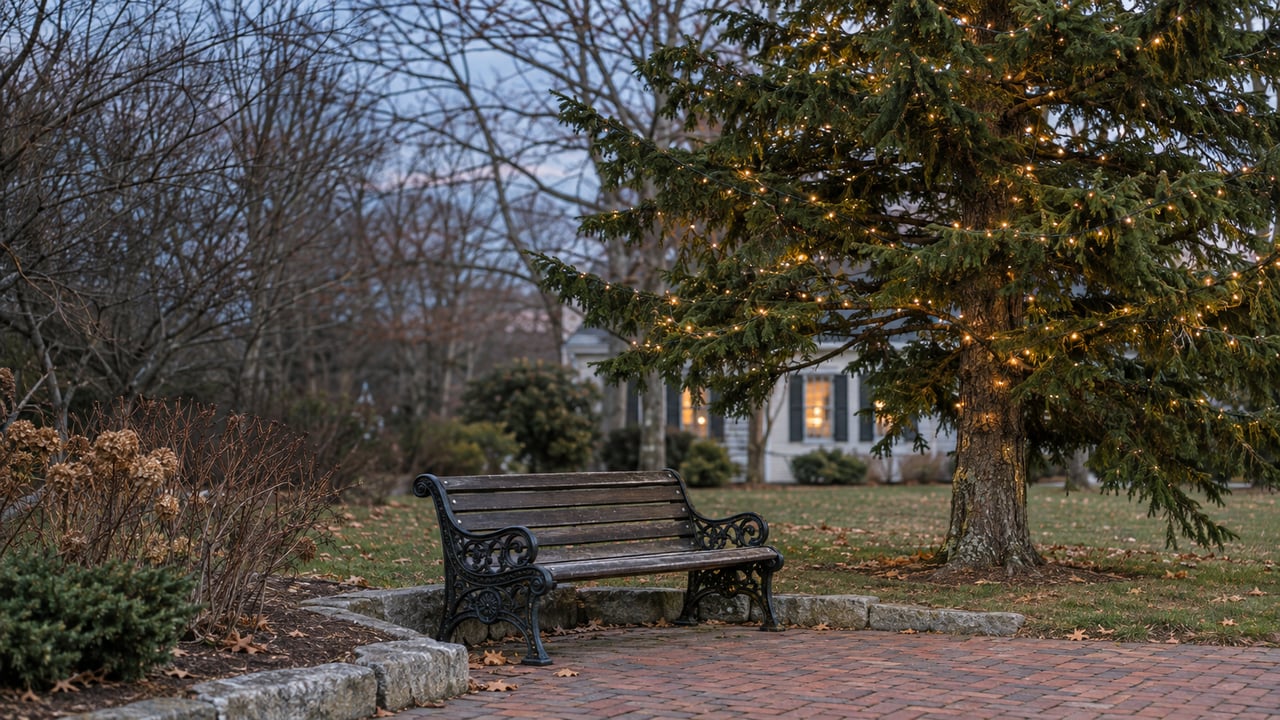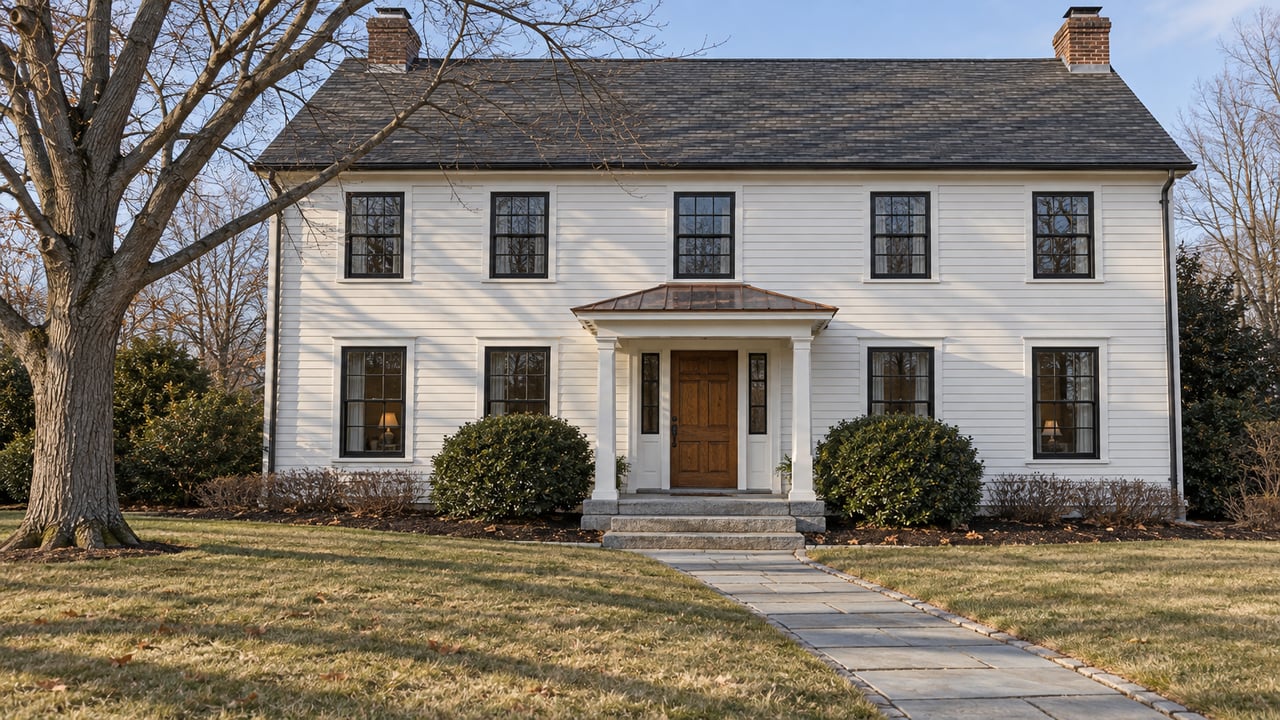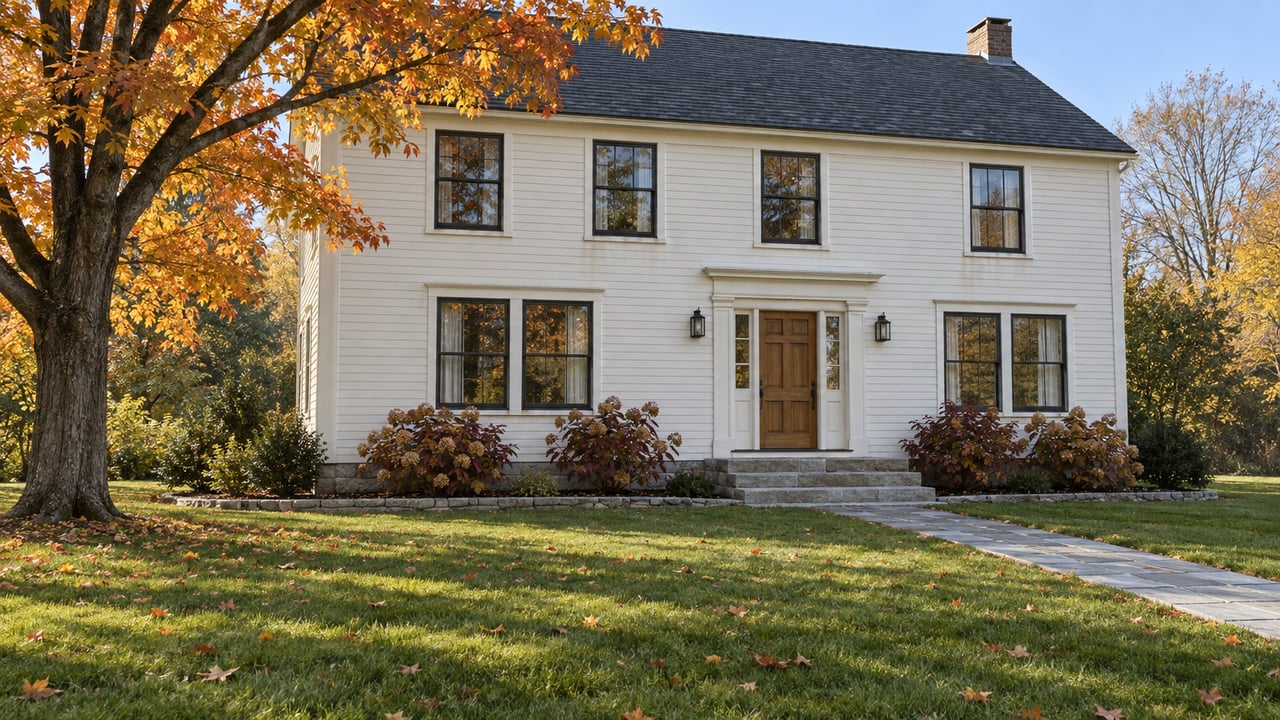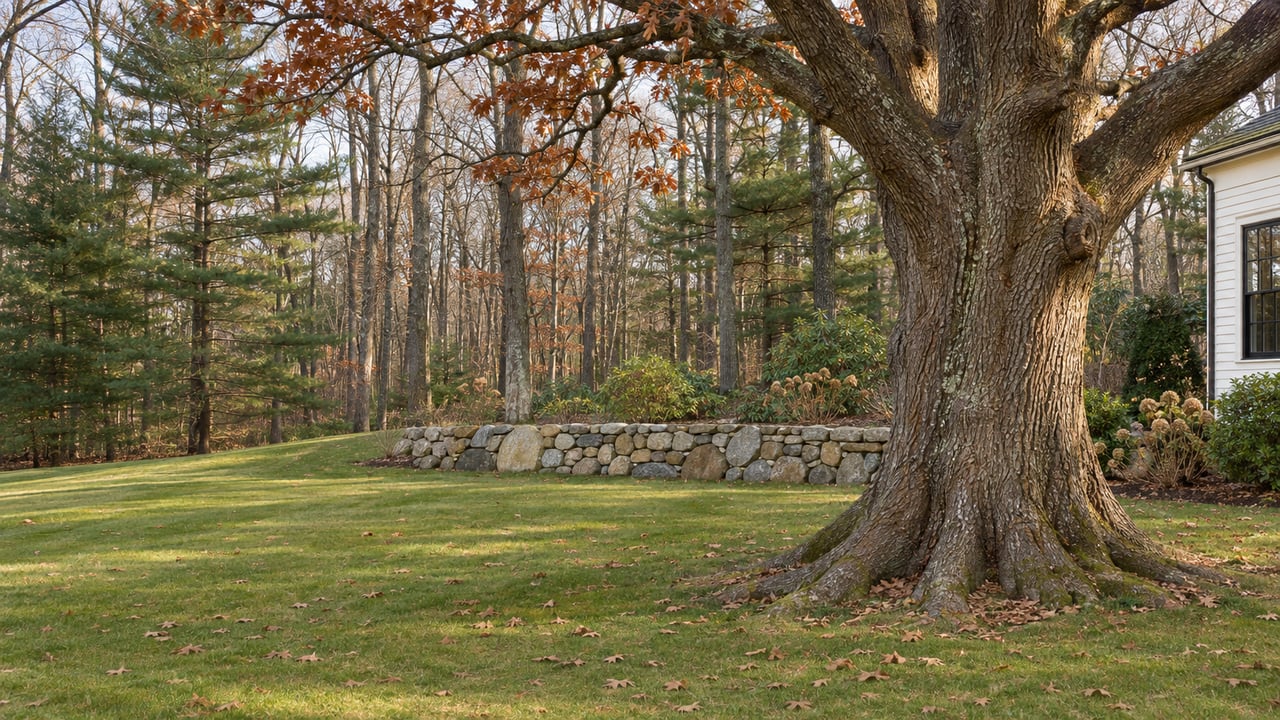
Picture a typical wooded Dover lot on a site plan. A thin band of setback runs along the property lines, and the open middle holds the house, the driveway, maybe a pool, a lawn or a paddock. Today, Dover's Stormwater Bylaw regulates tree removal in the setback band.
That could change. Dover's Tree Preservation Committee has spent 2026 working with the Metropolitan Area Planning Council on a possible Tree Preservation Bylaw. Its July working memo recommends extending review into the middle of larger lots. If you're pricing a teardown, a buildable parcel or a big addition in Dover, that recommendation matters more than any median sale price.
Where the line sits today
Dover regulates tree removal on private residential lots through its Stormwater Bylaw. Under MAPC's Working Progress Memo Two, dated July 31, 2026, that bylaw is triggered when land disturbance exceeds 5,500 square feet or 25 percent of the lot area, and it regulates only "the narrow band of setbacks."
The memo is direct about what follows from that:
"This leaves a large share of land at the center of lots unprotected from tree clearance."
The memo points to clearing for a new driveway, parking area or swimming pool, as well as phased work over the years, as sources of tree disturbance.
From a builder's point of view, that's the real takeaway. On a large Dover lot, the setbacks are rarely where a project's trees come down. The trees come down in the building envelope and along the drive.
What MAPC recommends instead
The memo is a working document. It lays out choices for the committee, not rules. Still, its recommendations show which way the drafting is leaning, and every one of them moves review toward the center of the lot.
What triggers review. MAPC recommends that the bylaw be triggered by both land disturbance and construction activity, meaning demolition, new construction or a substantial addition, above a threshold that still has to be set.
What counts as protected. The memo recommends protecting large areas of trees and significant individual trees. Contiguous tree cover above a set square footage, with 5,500 square feet given as an example, would be off-limits to removal "across all parts of a lot." Individual protected trees could follow the Stormwater Bylaw's existing 6-inch diameter-at-breast-height threshold, or the bylaw could give priority to overstory trees, the species that grow tall enough to form the town's canopy.
How lot size changes the rules. This is the recommendation that matters most for Dover's housing stock. For smaller lots, at or below the ½-acre, 1-acre or 2-acre zoning minimums, or alternatively under 3 or 5 acres, MAPC suggests keeping setback-only rules. For larger lots, it lays out three approaches:
- Planning Board site plan review when the house plus improvements exceed a threshold scaled to lot size, modeled on Wellesley's Large House Review.
- A cap on how much of a lot can be cleared, either a fixed square footage or a protected share that grows with lot size, similar to the Cape Cod Commission's model bylaw, which allows 30 or 50 percent clearing depending on location and district.
- A groundwater-based framework that allows less clearing where drinking-water aquifers are very shallow, such as the Protected Zone II recharge areas, and more clearing elsewhere in town.
The Wellesley comparison shows how option one might work. According to MAPC, Wellesley's tree bylaw for ordinary single-family homes covers setbacks only. Very large homes go to the Planning Board's Large House Review, where landscape preservation is one of six criteria. That review is triggered by total living area plus garage, scaled from 3,600 square feet on the smallest lots up to 7,200 square feet on a 40,000-square-foot lot. MAPC notes those lots are much smaller than Dover's, but the house-size thresholds "might be useful starting points."
What clearing could cost under the bylaw
If a plan clears protected trees, the memo expects replanting, fees or both. MAPC recommends letting owners combine replanting with fees, with replacement ratios that vary by the value of the tree removed and extra credit for planting native and overstory species.
The memo uses Weston's ratios as an example of variable replacement:
| Tree removed in Weston | Replacement owed per inch removed |
|---|---|
| Invasive species | 0.25 inch |
| Non-invasive, 6 to 24 inches DBH | 1 inch |
| Non-invasive, over 24 inches DBH | 2 inches |
Those are Weston's numbers, not Dover's. MAPC also describes credits that would let an owner who keeps a large overstory tree elsewhere on the lot offset mitigation owed for removals in the setback.
Review could rest with the Building Commissioner alone, with the Planning Board or a tree committee, or be split by tier, with routine lots handled by staff and larger ones by a board. MAPC notes that options involving the Planning Board may need more planning staff capacity, and that additional staff could be required. For anyone building, the choice of reviewer is a schedule question. A staff sign-off and a board hearing put a project on very different timelines.
The definitions still have to be written
One detail in the memo matters to anyone planning a renovation. MAPC found that Dover's zoning code "appears to lack clear definitions for demolition, new construction, and substantial additions." The closest definition, "Substantial Change" in the Site Plan Review section, counts additions of more than 250 square feet or 10 percent of existing floor area, whichever is less, within five years, along with any driveway relocation. That section does not apply to single-family districts. MAPC recommends writing new definitions into the tree bylaw or the zoning definitions.
How "substantial addition" ends up defined will decide whether a family adding a wing or a garage falls under tree review. That definition deserves close attention once a draft is posted.
How the committee reached this point
The work has followed a set plan. In February 2026, the committee reviewed the MAPC contract, which covered drafting and community outreach and was scheduled to start in March and run six to seven months. A $12,000 grant and $28,000 from the Planning Board's budget were set aside to fund it. The minutes add that regulations, the detailed rules for how a bylaw is applied, generally come after a bylaw passes.
At a June 3 public meeting, all 10 people who answered the poll supported a tree bylaw, seven strongly and three somewhat. Seven of nine said they had seen significant tree removal in Dover over the previous five years. Asked which activities the bylaw should cover, eight of nine chose new residential construction, eight chose teardowns and major additions, seven chose commercial construction, six chose accessory structures and five chose landscaping and site work. That is a small sample from one meeting, but it lines up with where MAPC's triggers point: teardowns and new houses.
At its Sept. 14 meeting, the Planning Board heard that the project should wrap up by the end of December and move toward Town Meeting, with the Planning Board involved along the way. Committee members were waiting for survey results before finalizing a draft.
The next public step is the committee's community forum on Thursday, Nov. 19, at Caryl Community Center, 4 Springdale Avenue. Registration opens at 6:30 p.m., and an interactive presentation starts at 7 p.m. Survey results and recordings of past meetings are on the Tree Preservation Committee page.
How this changes the way we read a Dover lot
Until the bylaw text is settled, a lot evaluation in Dover should cover the questions the draft is likely to ask:
- Where do the largest trees sit? Map the oldest and largest trees against the building envelope, not just the setbacks.
- Is the lot above the size cutoff? MAPC's suggested cutoffs range from the zoning minimum to 3 or 5 acres. A lot above whichever line is chosen could face a different kind of review than a smaller one.
- Is it in a Zone II recharge area? If the groundwater approach is adopted, location could limit clearing more than lot size does.
- Is the project phased? A plan to build the house now and the pool or barn later is exactly the incremental pattern MAPC flagged.
None of these questions is new to a builder. What's new is that the answers may turn into permitting requirements instead of design preferences. Everything above describes options under study. It is general information, not legal advice, and anyone with a project or purchase underway should confirm current requirements with the Town of Dover and their own attorney or engineer.
FAQ
Does Dover have a tree bylaw now? Tree protection on private residential lots currently comes through the Stormwater Bylaw, which applies above 5,500 square feet or 25 percent of the lot and regulates the setback band.
Would small lots be affected? MAPC's recommendation keeps setback-only rules for smaller lots and puts the broader approaches on larger ones.
Would removing invasive trees count? MAPC suggests discouraging excessive clearing but setting lower mitigation for invasive species, through a lower replacement ratio or credits for planting native and overstory trees in their place.
If you're weighing a Dover lot or teardown and want help working out how much of the site your plan would clear and where the big trees sit relative to the house, Barber Real Estate can walk the site with you and look at it the way a builder would. Schedule a free consultation.