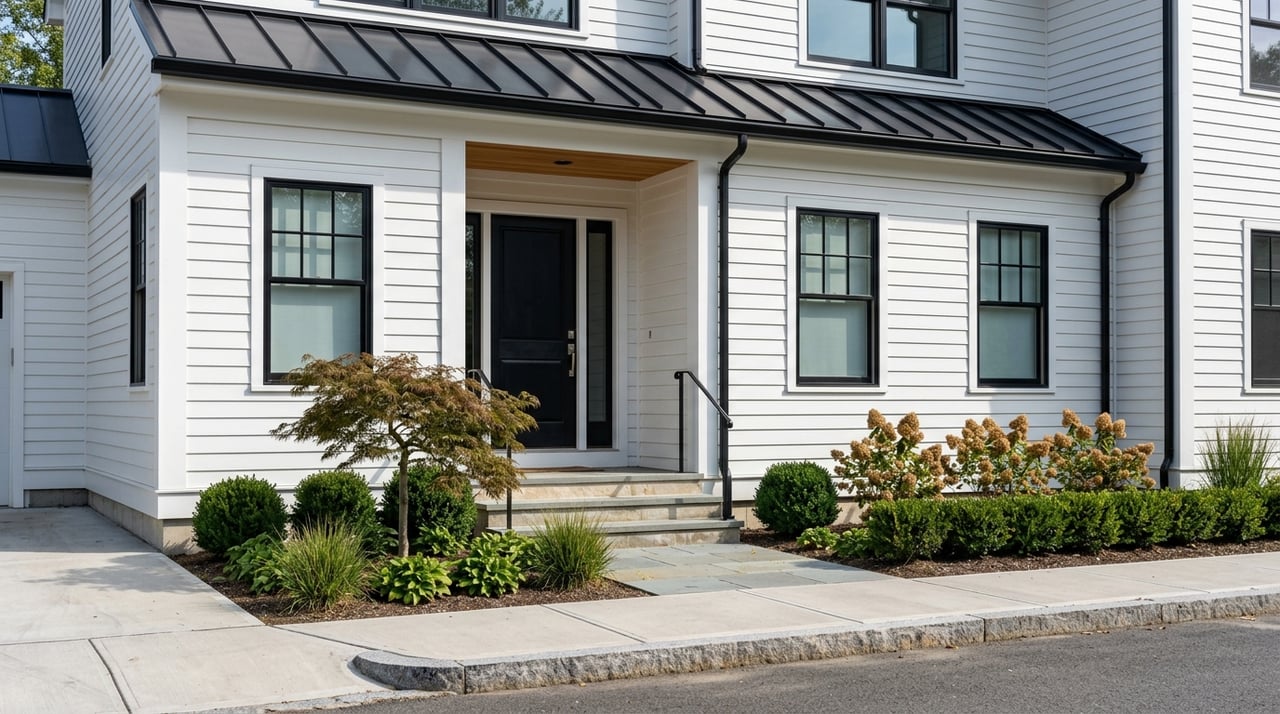
If you are trying to choose between a single-family home and a townhome in Natick, the right answer usually comes down to more than price. You are balancing monthly costs, maintenance, commute patterns, privacy, and how much flexibility you want over time. In a town with older housing, strong buyer demand, and a mix of detached homes and attached options near transit, those details matter. Let’s break it down.
Natick Housing Basics
Natick is still largely shaped by owner-occupied housing and detached homes. The town’s 2021 Housing Production Plan estimated that 60% of the housing stock was detached single-family, while 35% was total multifamily. Census QuickFacts also shows an owner-occupied rate of 68.2%, which helps explain why many buyers start their search with long-term ownership in mind.
Natick’s housing stock is also older than many buyers expect. According to the town, 58% of homes were built before 1960, 30% were built between 1980 and 2000, and only 4% were built in 2010 or later. That makes condition, upkeep, and renovation tolerance especially important when you compare a detached home with an attached one.
Single-Family vs Townhome in Natick
Why buyers choose single-family homes
Single-family homes usually appeal to buyers who want more privacy, more control, and more outdoor space. In Natick, current detached-home listings range widely, from about $639,900 to $3.495 million, with examples that highlight features like level lots and detached garages. If yard space, storage, or room to expand are high on your list, detached homes often give you more options.
A single-family home can also offer more long-term flexibility. Natick now permits accessory dwelling units as of right on principal one-family dwellings, which may matter if you are thinking ahead about multigenerational use or future resale. The town also states it cannot require off-street parking for an ADU within half a mile of an MBTA commuter rail station, which can make some detached properties even more versatile.
Why buyers choose townhomes
Townhomes usually attract buyers who want a more manageable property and a simpler day-to-day routine. In Natick, the attached-home market is smaller, with current townhome listings on Redfin showing 6 homes plus 1 early-access listing and a median listing price of $735,000. These listings often emphasize private patios, decks, assigned parking, attached garages, walkability, and commuter-rail access.
That profile fits many buyers who care more about convenience than a large lot. Town planning documents also point to higher-density housing near key areas like Natick Center, West Natick, the Golden Triangle, and the Route 9 and Route 27 area. If you want easier access to transit or mixed-use areas, a townhome may line up better with your lifestyle.
Compare the Monthly Cost
Purchase price is only one number
It is easy to focus on the asking price, but your real decision should center on the full monthly carry. Census QuickFacts lists Natick’s median monthly owner costs with a mortgage at $3,448. That broad figure is a reminder that ownership costs are not just about the purchase contract.
For detached homes, the current listing sample runs from roughly $639,900 to $3.495 million. For townhomes, the visible sample runs from about $699,000 to $1.025 million, with a median listing price of $735,000. In some cases, the entry point for a townhome may look similar to a lower-priced single-family home, so you need to compare the entire payment structure, not just list price.
Taxes and HOA dues matter
Natick’s FY2026 residential tax rate is $12.17 per $1,000 of assessed value. The town reports an average single-family assessment of $937,795 and a median single-family assessment of $838,600, which implies about $11,413 and $10,206 in annual taxes before exemptions. A lower-valued attached home will often have a lower tax bill, but that does not automatically mean a lower monthly cost.
HOA dues can narrow that gap. One current Natick townhome listing shows a $370 monthly HOA, which is $4,440 per year. That may still be worthwhile if the HOA covers exterior upkeep or simplifies ownership, but it should be weighed against the greater independence of a single-family home.
Think About Maintenance in Natick
Older housing changes the equation
Because so much of Natick’s housing stock predates 1960, maintenance should be part of your decision from day one. Older detached homes may be more likely to require roof work, system updates, exterior repairs, drainage improvements, or site work over time. That does not make them a poor choice, but it does mean you should be honest about your budget and tolerance for projects.
This is where a builder-informed lens can help. When you walk through an older home, you are not just evaluating finishes. You are also trying to understand what may need attention after closing and whether the property gives you enough upside to justify that work.
Townhomes can reduce the upkeep load
Townhomes often reduce the amount of exterior work you directly manage. That can be appealing if you want homeownership without taking on every repair and outdoor task yourself. In a market like Natick, where many detached homes are older, that lower-maintenance setup can be a major advantage.
Of course, less direct maintenance usually comes with tradeoffs. You may have shared walls, HOA rules, and less control over exterior changes or outdoor use. For some buyers that is a fair trade. For others, it feels restrictive.
Consider Your Commute and Daily Routine
Natick offers two MBTA commuter rail stops, Natick Center and West Natick, along with MWRTA bus routes and nearby Logan Express access. At the same time, town planning materials still describe Natick as auto-dependent because of Route 9, Route 135, and Route 16 traffic, along with station parking constraints. Census data puts the mean travel time to work at 30.7 minutes.
That local context matters. If your week depends on rail access and you want a shorter-to-manage property near a station area, a townhome may be the cleaner fit. If your routine is more car-based and you care more about lot size, garage space, or a broader detached-home selection, a single-family home may make more sense.
Inventory and Resale in Natick
Detached homes offer more choice
Natick’s detached-home market is simply broader. The current listing sample shows a wider price range and more variation in layout, lot size, and features. That can make it easier to find a home that matches a specific wish list, especially if you want more interior space or future expansion potential.
Townhomes are a smaller and more concentrated part of the market. If you want attached living in a specific pocket of Natick, you may have fewer options at any given time. That can mean waiting longer for the right fit or making faster decisions when a well-located unit hits the market.
Broad appeal supports resale
Redfin reports that Natick homes receive 4 offers on average and sell in about 20 days. That kind of competitive pace tends to reward homes with efficient layouts, practical features, and commuter-friendly locations. Both property types can perform well, but the strongest resale opportunities often come from matching the home to what local buyers actually value.
In practice, that means thinking ahead. A detached home may attract buyers who want privacy, yard space, and flexibility. A townhome may attract buyers who want convenience, lower-maintenance living, and access to Natick Center or West Natick.
A Simple Natick Decision Framework
If you are still torn, start with these questions:
- How much maintenance do you want to handle directly?
- Do you need a private yard, or would a patio or deck be enough?
- Is your routine better served by transit access or easier driving patterns?
- Do you want control over future additions, renovations, or an ADU?
- If you stay 7 to 10 years, which property type better fits your likely next buyer?
In general, a single-family home may be the better fit if you want privacy, more outdoor space, expansion potential, and long-term flexibility. A townhome may be the better fit if you want a lower-maintenance setup, easier access to transit-oriented areas, and a property that feels simpler to manage.
The best decision is the one that matches both your budget and your daily life. If you want help comparing specific homes in Natick, including condition, layout, long-term upkeep, and future potential, Barber Real Estate can help you sort through the options with a practical, builder-informed perspective.
FAQs
How do Natick single-family home prices compare with townhome prices?
- Current detached-home listings in Natick range from about $639,900 to $3.495 million, while current townhome listings range from about $699,000 to $1.025 million, with a reported median townhome listing price of $735,000.
What are the main benefits of a townhome in Natick?
- A Natick townhome may offer lower-maintenance living, access to areas near transit or mixed-use destinations, and features like patios, decks, assigned parking, or attached garages.
What are the main benefits of a single-family home in Natick?
- A Natick single-family home may offer more privacy, more control over the property, more yard space, and greater long-term flexibility for expansion, renovation, or an accessory dwelling unit.
Do townhomes in Natick always cost less each month?
- Not always. An attached home may have a lower tax bill if the assessed value is lower, but HOA dues, such as a current example with a $370 monthly HOA, can reduce part of that savings.
Why does home age matter when buying in Natick?
- Natick has an older housing stock, with 58% of homes built before 1960, so maintenance, systems, exterior condition, and renovation needs can play a bigger role in your ownership costs and planning.
Is Natick a good place to buy near commuter rail?
- Natick has two MBTA commuter rail stops, Natick Center and West Natick, and some attached-home listings highlight access to those areas, but local planning materials still describe the town as auto-dependent because of traffic patterns and station parking limits.