If you are considering a land purchase or estate-style home in Dover, the biggest question is not always how many acres you are getting. It is how much of that land you can actually use, improve, and enjoy over time. In a town known for open space, rural character, and larger parcels, understanding the difference can help you avoid expensive surprises and make a smarter long-term decision. Let’s dive in.
Why Dover draws estate-home buyers
Dover offers a very specific setting that appeals to buyers who want privacy, land, and a more open residential environment within reach of Boston. The town describes itself as rural, scenic, and open-space oriented, and the 2020 Census recorded 5,923 residents across 15.10 square miles of land. That works out to a relatively low population density of about 392 people per square mile.
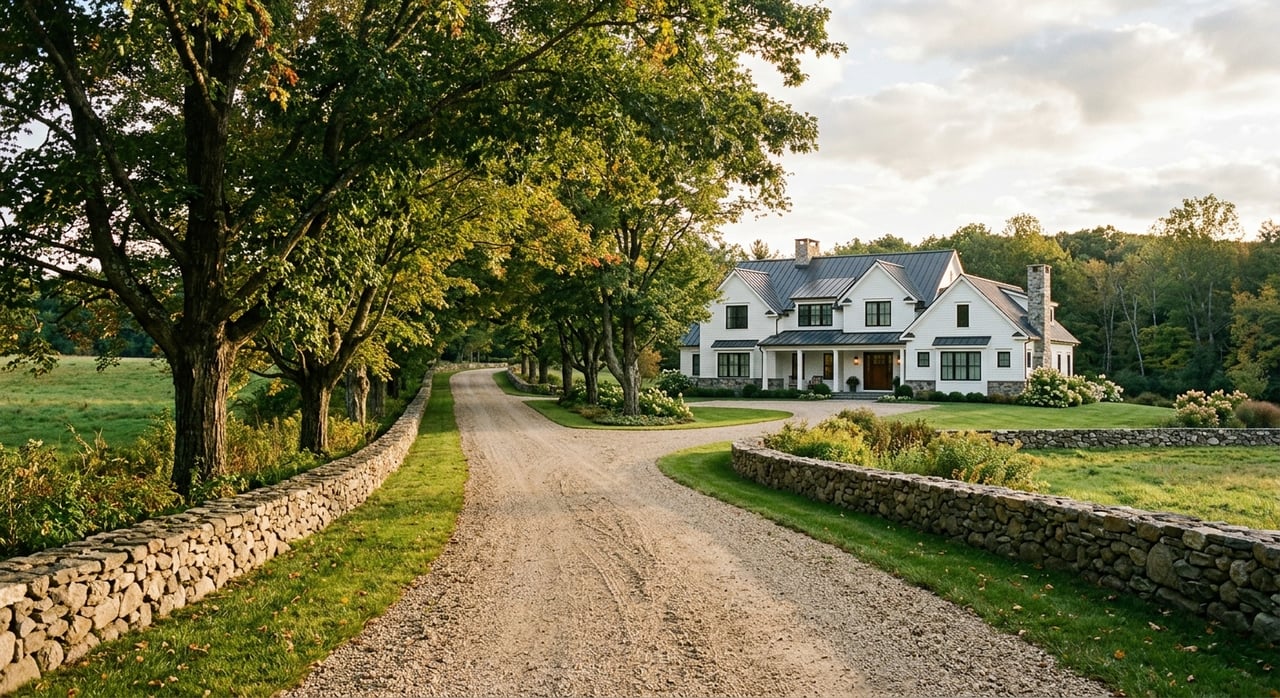
That landscape matters when you are evaluating estate-style properties. Dover’s town materials describe open pasture, tree cover, old stone walls, and historic farm buildings that still shape the town’s feel today. The local open-space network also includes trails, Charles River access, and major conservation holdings such as Noanet Woodlands, the Larrabee Estate, and Hale Reservation.
For many buyers, that setting is the point. You may be looking for a home with a longer driveway, more separation from neighbors, space for outdoor living, or room to plan future improvements. In Dover, those goals are possible, but they depend on the property’s legal and physical constraints, not just the listing’s acreage number.
Start with usable land, not gross acreage
When you look at a large parcel online, it is easy to assume the full site is available for a pool, addition, guest space, barn, garage, or expanded outdoor living area. In Dover, that assumption can lead you in the wrong direction. The town’s master plan makes clear that long-term buildout depends heavily on lot lines, soils, topography, wetlands delineations, conservation restrictions, easements, and rights-of-way.
That means a five-acre parcel may function very differently from another five-acre parcel down the road. One could have a generous buildable envelope with straightforward access and room for future changes. Another could be constrained by wetland buffers, stream setbacks, frontage issues, or district rules that reduce what you can realistically do with the land.
This is where a builder-informed review becomes especially valuable. If you are buying for privacy, expansion potential, or custom-home flexibility, you want to evaluate what is legally usable today and what may remain feasible later.
Understand Dover zoning before you fall in love
Dover has three residential zoning districts: R, R-1, and R-2. These require minimum lot sizes of one-half acre, one acre, and two acres respectively. For buyers focused on larger homesites, the R-2 district often gets the most attention, but the details matter.
The town explains that zoning compliance is not based on acreage alone. For example, an R-2 lot must contain a 200-by-200-foot square and have 200 feet of frontage. A parcel may look large enough on paper and still fall short in ways that affect future plans.
Dover’s zoning code also excludes ways and water bodies from lot-area calculations. In the Conservancy District, only 25 percent of lot area may count. If a lot spans two zoning districts, the more restrictive district generally controls unless the less restrictive section can independently satisfy the smaller district’s minimum requirements.
Frontage and access can shape everything
Access is one of the first things to check on a larger parcel. In Dover, physical access through frontage is required, and the code does not allow shared driveways or curb cuts for lot frontage purposes. That can affect whether a parcel is practical for a new build, a reconfiguration, or a future division.
This is especially important if you are looking at older estates, long driveways, or lots with unusual shapes. What appears workable from a satellite view may not satisfy the town’s standards for frontage and access. If your long-term plan includes changes to the property, access should be part of your early due diligence.
The town is also clear that lots may not be divided or reduced below required area, frontage, or setback standards. So if part of the property’s appeal is future subdivision potential, that assumption needs to be tested carefully against current rules.
Setbacks can limit home placement and additions
A large lot does not always mean flexible siting. In Dover, accessory buildings in residential districts must meet the same street setback as a dwelling and at least half the required side and rear setbacks. That can affect where you place a detached garage, studio, barn, or other secondary structure.
River and stream protections can create even more meaningful limits. Dover’s rules impose a 150-foot setback from the Charles River and 50-foot setbacks from several named brooks. Special permit relief may be possible in some cases, but only if drainage and runoff impacts are controlled.
For buyers, the practical takeaway is simple: a beautiful estate lot may still have a tighter usable building area than expected. Before you count on future improvements, it is worth understanding exactly where those protected setback lines fall.
Wetlands and conservation shape real-world privacy
Many buyers assume privacy comes from acreage alone. In Dover, privacy often comes from the broader land pattern around a home, including conservation land, wetlands, trails, and neighboring parcel layouts. Those features can enhance the setting, but they can also limit improvements.
The Conservation Commission regulates work within 100 feet of wetlands and 200 feet of perennial waterways. The town also oversees more than 450 acres of town-owned conservation land, and Dover has an active preservation culture supported by its Open Space Committee and broader open-space planning.
This matters because the same landscape features that make a property feel special can affect where you install patios, pools, driveways, parking areas, additions, or landscaping changes. A parcel that feels expansive may have a much smaller disturbance area once wetland buffers and related constraints are mapped.
Tree and stone wall issues can also come into play. Dover notes that tree removal on private property is generally outside town jurisdiction unless wetlands or perennial-stream buffers are involved, and scenic-road hearings may be required for certain tree removals and stone-wall work.
Septic and wells deserve close attention
For estate-style homes in Dover, utilities often require more careful review than buyers expect. On rural-style parcels, private septic systems and wells are central to due diligence, especially if you are buying an older home, planning an addition, or considering new construction.
Dover enforces state Title 5 septic rules but adds stricter local standards. New construction on previously undeveloped lots cannot use a soil absorption system where seasonal high groundwater is three feet or less below the surface unless the board approves a site-specific model showing no significant breakout risk. Septic systems are also prohibited in periodically flooded areas.
Private wells are also regulated closely. Dover requires a well construction permit before work starts, installation must be done by a Massachusetts-certified well driller, wells must be at least 10 feet from a property line, and water quality testing is required before a new well is used and before the sale of an existing house served by a well.
These are not small details. Septic feasibility, groundwater conditions, and well requirements can affect design flexibility, carrying costs, and whether a future expansion is realistic.
Future improvements may trigger review
One of the biggest mistakes buyers make with estate properties is assuming that future changes will be simple because the lot is large. In Dover, site plan review can apply to more than a new house footprint. The town’s framework considers drainage, utilities, wastewater, parking, access, landscaping, screening, and related site impacts.
The code defines a substantial change broadly. It includes additions over 250 square feet or 10 percent of existing gross floor area within five years, along with driveway, parking, pavement, and other exterior changes.
That does not mean improvements are impossible. It means you should evaluate them through the lens of local review standards early, especially if your purchase decision depends on adding square footage or reworking the site after closing.
ADUs may offer added flexibility
For buyers who want multigenerational flexibility, guest space, or a more adaptable long-term property plan, accessory dwelling units may be part of the conversation. Dover’s Land Use and Housing Development page states that after the May 2025 amendment, attached and detached ADUs are now subject only to Planning Board site plan review.
The town also removed the prior owner-occupancy requirement and the detached-ADU special-permit requirement. That change may create more flexibility on certain homesites, although each property still needs to be evaluated based on site conditions, setbacks, utilities, and review requirements.
If ADU potential matters to you, it is best to treat it as a property-specific analysis rather than a general assumption. The zoning path may be more flexible now, but the site still has to work.
A practical due diligence checklist
Before you buy a land parcel or estate-style home in Dover, it helps to review the property from several angles at once. A builder-informed approach usually starts with these questions:
- What zoning district is the property in?
- Does the lot satisfy frontage, area, and shape requirements?
- Are wetlands, streams, or conservation restrictions limiting the usable area?
- Where are the actual setback lines for the house and any accessory structures?
- How do septic and well conditions affect current use and future plans?
- Would an addition, pool, garage, barn, or ADU likely trigger further review?
- Is the privacy you want coming from your own parcel, adjacent conservation land, or both?
- Are your assumptions based on a listing map, or on actual survey-level information?
Dover’s assessor resources provide online GIS mapping, abutter information, and property record cards, which are useful starting points. But the town also notes that assessor parcel maps are not the authoritative legal record of boundary location.
For boundary questions, the authoritative record is at the registry of deeds, and a legally authoritative boundary map can only be produced by a professional land surveyor. Dover’s FAQ is also direct on this point: if you need to determine property lines, hire an engineer to survey the property.
Taxes are part of the ownership picture
When you evaluate a large property, carrying costs matter alongside purchase price and improvement potential. Dover’s FY2026 tax rate is $11.19 per $1,000 of assessed value, with FY2026 assessments based on January 1, 2025 values.
For estate-style purchases, that tax picture should be part of your overall decision framework. It is one more reason to think beyond the headline acreage and focus on how well the property supports your actual goals.
The bottom line on Dover estate properties
In Dover, a great estate property is not defined by size alone. Its value usually comes from the combination of legally usable land, workable access, utility feasibility, thoughtful siting, and realistic options for future improvements.
That is why two properties with similar acreage can offer very different long-term value. If you approach the search with a clear understanding of zoning, setbacks, wetlands, wells, septic, and site review, you will be in a much stronger position to choose the right property with confidence.
If you are weighing land or estate-style homes in Dover and want practical guidance with a builder-informed lens, schedule a free consultation with Barber Real Estate.
FAQs
What makes a large Dover lot different from a usable Dover lot?
- In Dover, gross acreage alone does not determine value or flexibility. Usable land depends on zoning, frontage, setbacks, wetlands, stream buffers, conservation restrictions, soils, and access.
What zoning districts should buyers know in Dover?
- Dover has R, R-1, and R-2 residential districts, with minimum lot sizes of one-half acre, one acre, and two acres. Larger estate-style properties are often associated with R-2, but lot shape and frontage rules also matter.
What frontage rules affect estate-style homes in Dover?
- Dover requires physical access through frontage, and shared driveways or curb cuts do not count for frontage purposes. In an R-2 district, for example, a lot must contain a 200-by-200-foot square and have 200 feet of frontage.
How do wetlands affect Dover property improvements?
- Dover regulates work within 100 feet of wetlands and 200 feet of perennial waterways through the Conservation Commission. These limits can affect additions, patios, pools, driveways, landscaping, and other site changes.
What should buyers know about wells and septic in Dover?
- Dover applies state Title 5 septic rules with stricter local standards in some cases, and private wells require permits, certified installation, and water testing. These systems are a key part of due diligence for larger and more rural properties.
Can you add an ADU to a Dover estate-style property?
- Dover states that attached and detached ADUs are now subject only to Planning Board site plan review after the May 2025 amendment. Whether an ADU is practical still depends on the property’s site conditions, setbacks, and utility constraints.
Are online parcel maps enough for evaluating a Dover property?
- No. Dover’s assessor resources are useful for research, but the town states that assessor parcel mapping is not the authoritative legal record of boundary location. For boundary certainty, you should rely on the registry record and a professional land surveyor.