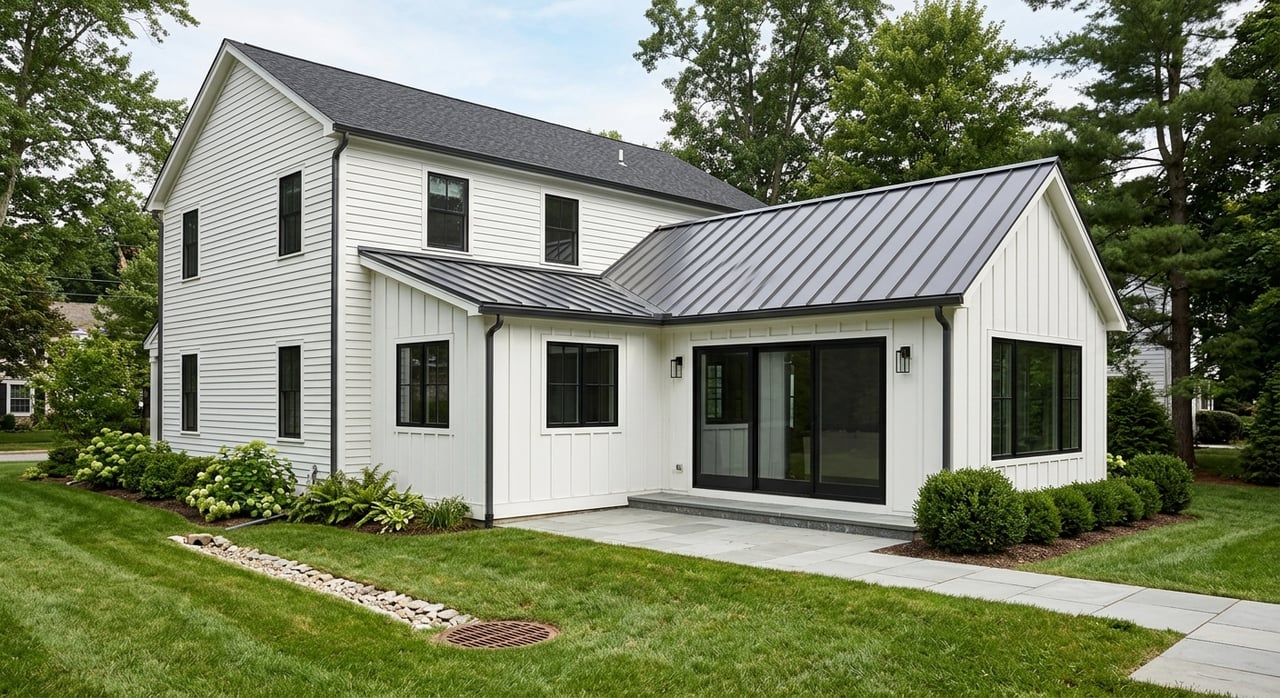
Thinking about adding on or rebuilding in Holliston? The exciting part is often the design, but the early decisions usually have more impact on your budget, timeline, and stress level than the finishes you choose later. If you understand the lot, the zoning, and the local approval path first, you can avoid expensive surprises and plan with more confidence. Let’s dive in.
Start With Lot Fit
Before you sketch a bigger kitchen, new primary suite, or full custom home, you need to know what the lot can actually support. In Holliston, the zoning bylaw sets the basic dimensional limits that shape what may be possible on a property.
The town’s residential districts list minimum lot areas of 20,000 square feet in Ag.Res.A, 15,000 square feet in Ag.Res.B, and 10,000 square feet in the Residential District. The bylaw also lists 50-foot frontage, 30-foot front setbacks, 10-foot side setbacks, 10-foot rear setbacks, and 25% maximum coverage for buildings and structures. Those numbers matter early because lot shape and coverage can limit a project before design preferences ever come into play.
That means two homes with the same square footage can have very different options depending on where they sit on the lot. A shallow backyard, narrow side yard, or existing accessory structure can make an addition harder than it looks from the street.
Check Overlay Districts Too
Base zoning is only part of the picture. Holliston also posts zoning map layers for the Aquifer Protection District, Groundwater Protection Map, Senior Residential Overlay, and MBTA Districts.
If your lot falls within one of these mapped areas, it can affect what is feasible and what kind of review may be needed. This is one of the first reasons a location-specific property check matters before you invest in full plans.
Review the Existing House Footprint
Existing homes create another important layer of complexity. If the house is already nonconforming, even a simple addition may need a closer zoning review.
Holliston’s bylaw states that changes that increase an existing nonconformity or create a new one generally require a dimensional variance. It also states that extending an exterior wall along the same nonconforming yard line requires a special permit from the Zoning Board of Appeals, though some smaller changes may be allowed if they do not create or worsen the nonconformity.
Understand Holliston’s Permit Stack
In Holliston, one project can involve more than just the Building Department. Depending on the property and scope, your plan may touch zoning, building, health or septic, conservation, planning, and access-related approvals.
That is why early planning should focus on sequencing, not just design. A project can look straightforward on paper but still slow down if one approval depends on another or if a required filing window is missed.
Building Permit Basics
Holliston uses an online permit system. The town states that first-time permit applicants need license, workers’ compensation, and liability insurance information before submitting, and all building permit applications must be paid before they enter the review queue.
For additions and renovations, Holliston requires Health Agent approval of the Project Evaluation for Building Permit, also called Form A, with a $50 fee. The town also requires exterior changes to include a plot plan showing distances to the nearest septic component, while interior changes require a sketch of the rooms being changed.
Septic Review Can Reshape the Plan
If the property uses septic, this review is not something to leave for later. Holliston states that its local septic rules supplement Massachusetts Title 5, and the town’s septic plan review form shows that a septic project may also require Conservation Commission review, a building permit, plumbing or gas permits, ZBA relief, or Planning Board approvals.
The septic plan review form also asks whether the proposed system is within 100 feet of wetlands or 200 feet of a perennial stream. That alone tells you why septic capacity, location, and site conditions should be reviewed before the floor plan gets too far along.
Wetlands Review Can Set the Pace
If the project is near wetlands, conservation review may become the key timeline driver. Holliston identifies the two most common Conservation Commission filings as a Request for Determination of Applicability and a Notice of Intent.
The town’s 2026 conservation schedule shows regular hearings through the year, and a new application must be submitted two weeks before the meeting date to make that hearing. Holliston also states that owners within 100 feet of a wetlands proposal are mailed notice, hearings are advertised at least 5 days before the hearing, and decisions are generally issued within 21 days after the hearing closes.
Planning Board Timing Matters
Some projects may also need Planning Board site plan review or a special permit. Holliston’s regulations state that completed applications are distributed within 7 days, reviewing town agencies respond within 30 days, public hearings are held within 65 days for special permits and certain site plans, and final action is due within 90 days for special permits or 30 days after a site plan hearing closes.
Just as important, the regulations say that once an application is submitted, no grading, utility installation, tree removal, or construction should begin until the application is reviewed and approved. That can be a major scheduling issue if you are trying to line up contractors too early.
Do Not Forget Access Permits
New construction and larger site work may need approvals beyond the house itself. Holliston’s DPW lists separate applications for driveway openings and trench permits.
This is easy to overlook when you are focused on the building, but access and utility work often affect both timing and scope. It is another reason to map the full permit path up front.
Make Scope Decisions Early
One of the biggest early forks in the road is deciding whether you are planning a modest addition, a major renovation, or a full tear-down and rebuild. In Holliston, that choice affects zoning strategy, permit risk, and likely timeline.
A smaller addition may fit within the current structure and lot constraints. A larger expansion may push the project into variance or special permit territory, especially if the house is already nonconforming.
Know When a Tear-Down Changes Everything
If you are considering replacing the house entirely, check demolition requirements early. Holliston states that owners seeking to demolish a structure built in 1950 or earlier must complete a supplemental demolition application.
That means an older home should not be treated like a routine tear-down. If you are comparing renovation versus rebuild, this is one of the first practical items to verify.
Coverage Limits Matter
A lot can run out of room in ways that are not obvious at first glance. Because Holliston caps building and structure coverage at 25% in its residential districts, some properties hit a coverage limit before they hit the square footage a buyer or owner had in mind.
This is why it helps to review the house footprint, garage, sheds, and other structures together. Looking at each item separately can create a false sense of flexibility.
Build the Right Early Team
Before full design work begins, it helps to treat the process like a site verification exercise. The right team often includes a builder or general contractor, an architect or designer, and a surveyor.
If septic or wetlands are involved, a septic designer, soil evaluator, or wetlands professional may also be needed. Holliston’s Planning Board regulations also show that certain site plan and special permit submissions may require plans prepared by a registered land surveyor and design elements prepared by a licensed professional engineer.
Ask These Questions First
In Holliston, the most useful early questions are practical ones tied directly to the town’s forms and bylaws:
- Is the house already nonconforming?
- Does the proposed addition stay within current setbacks and coverage?
- Is the lot in an overlay district?
- Is the septic system adequate for the proposed scope?
- How close are wetlands or streams to the proposed work?
- Will the project need Conservation Commission, Planning Board, or ZBA review?
- Is the street accepted?
- Will driveway opening or trench permits be required?
When you answer those questions first, the design process becomes much more efficient. You are no longer guessing at what might work. You are designing around real site conditions and local procedures.
Why Early Feasibility Saves Money
The cheapest mistake to avoid is the one you catch before full drawings are done. In Holliston, the town’s own applications and timelines make it clear that feasibility can be won or lost at the site-evaluation stage.
A zoning, septic, and wetlands pre-check can save time, reduce redesign costs, and help you compare options more realistically. That is especially true if you are buying with plans to expand, evaluating a tear-down candidate, or trying to decide whether a property’s long-term potential justifies the purchase.
A builder-informed real estate perspective can be especially valuable here. If you understand likely constraints before you buy or before you commit to a major scope, you can make decisions with a clearer view of risk, cost, and long-term value.
If you are weighing an addition, rebuild, or lot purchase in Holliston, Barber Real Estate can help you think through the property with a practical, builder-informed lens before you go too far down the road.
FAQs
What should you check first before planning an addition in Holliston?
- Start with zoning district, lot area, frontage, setbacks, building coverage, septic conditions, wetlands proximity, and whether the existing house is nonconforming.
Does a nonconforming house in Holliston affect an addition plan?
- Yes. Holliston’s bylaw states that changes that increase an existing nonconformity or create a new one generally require a dimensional variance, and some extensions along a nonconforming yard line require a special permit from the Zoning Board of Appeals.
Can wetlands affect a new build or renovation in Holliston?
- Yes. If work is near wetlands, Conservation Commission review may be required, and application timing can affect when the project is heard and how quickly a decision is issued.
Do septic issues matter early in a Holliston project?
- Yes. Holliston’s permit forms show that septic location, capacity, and proximity to wetlands or perennial streams can shape both the project layout and the approval path.
Are there separate permits for driveway or utility work in Holliston?
- Yes. Holliston’s DPW lists separate applications for driveway openings and trench permits, so site access and utility work may need their own approvals.
When should you involve professionals for a Holliston addition or new build?
- Early. A builder or contractor, architect or designer, surveyor, and, when needed, septic or wetlands professionals can help confirm feasibility before full construction drawings are prepared.