If you are thinking about a move to Needham, daily life is often what matters most. You want to know how the town feels, how easy it is to get around, and what kind of housing and amenities you will actually use week to week. This guide walks you through everyday living in Needham, from the town center to key neighborhood areas, so you can get a clearer picture of what life here may look like. Let’s dive in.
Needham at a glance
Needham is a town of about 33,000 residents located roughly 10 miles southwest of Boston, set on rocky uplands within a loop of the Charles River. According to the town’s community overview, it covers 12.75 square miles, which gives it a suburban feel while still keeping many destinations relatively close.
The landscape also shapes the town’s character more than you might expect. The town lists elevations ranging from 85 feet at Rosemary Meadows to 180 feet at Needham Square and up to 300 feet at Birds Hill, according to Needham demographics information. In practical terms, that helps explain why some areas feel flatter and more tucked in, while others have a more elevated, distinct setting.
Everyday feel in Needham
For many buyers, the biggest question is simple: what does day-to-day life feel like here? Needham tends to offer a balance of residential streets, local commercial areas, commuter access, and open space, which can make it appealing if you want a town with both convenience and breathing room.
Resident perception of safety is also a meaningful part of that picture. In the town’s 2024 Community Health Assessment, 99% of respondents rated daytime safety in their neighborhood and downtown or commercial area positively, while 98% rated property-crime safety positively. That does not tell you everything about a place, but it does provide useful context for how residents experience daily life.
Needham Center as the downtown hub
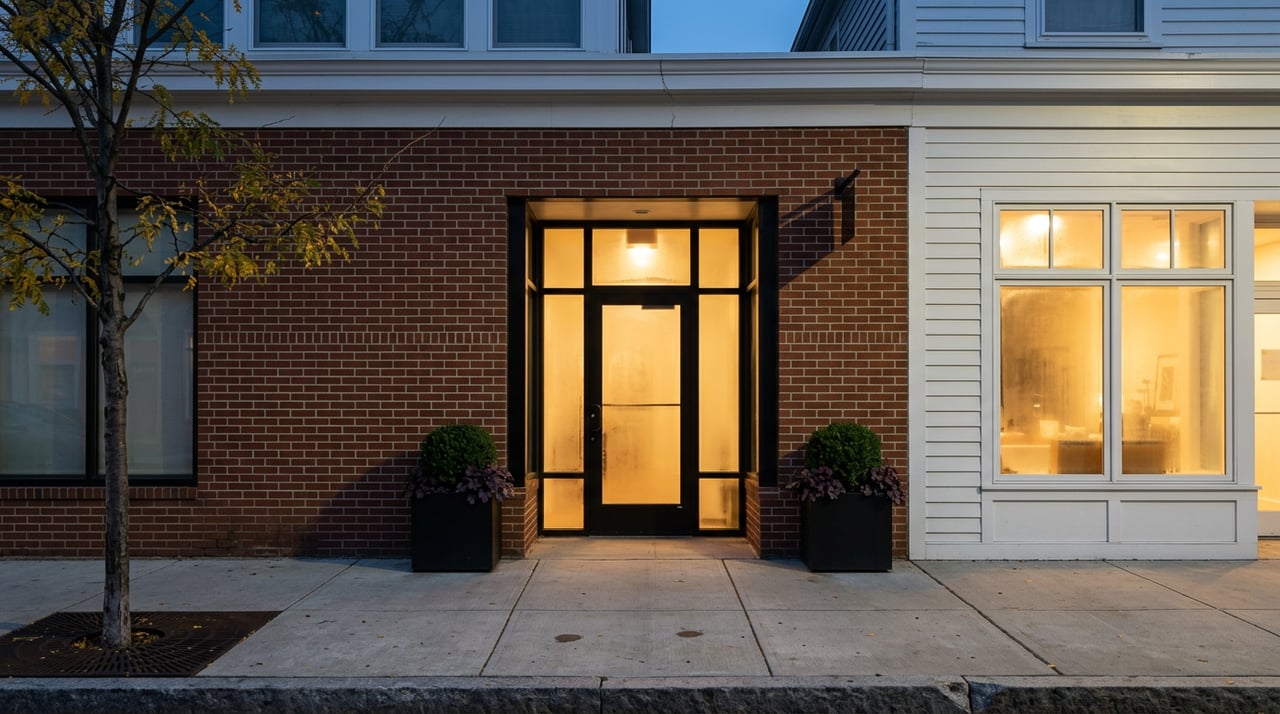
Needham Center is the town’s downtown core and the area with the most urban feel. Town planning materials describe it as the downtown hub, anchored by Town Hall and the Common, and the Downtown Study frames it as a mixed-use local shopping district with goals around more housing, better pedestrian conditions, and improved parking and traffic flow.
If you like having errands, dining, civic buildings, and commuter rail access in one general area, Needham Center is an important part of the town to understand. It is less about a big-city pace and more about having a recognizable center where daily routines can feel efficient and connected.
For buyers, this area can also matter from a housing standpoint. Town planning and housing documents suggest that some newer multifamily housing has been concentrated near transit and downtown-oriented locations, which may create more options beyond traditional single-family homes.
Needham Heights and other local nodes
Needham is not defined by one center alone. Needham Heights has its own commercial presence around West Street and Highland Avenue, and the town has highlighted the area through its Needham Heights mural project, which points to the visibility and local activity of that retail corridor.
For day-to-day living, areas like Needham Heights can offer a different rhythm than the main downtown core. Instead of thinking of the town as one single destination, it is more helpful to think in terms of several local nodes where you may shop, commute, or spend time depending on where you live.
Needham Junction is another key example. Town planning materials tie the Junction and Chestnut Street corridor to Beth Israel Deaconess Hospital and Needham Junction Station, and describe the area as a transit-oriented redevelopment opportunity. That makes it a practical location to watch if you are interested in access, mixed-use growth, or housing near transit.
Needham Crossing and mixed-use growth
Needham Crossing adds another layer to the town’s layout. The town describes Needham Crossing as a newer mixed-use node with residential, office, retail, restaurant, and consumer-service uses, plus natural edges such as Cutler Lake Park and the Charles River.
That combination can appeal to buyers who want something a bit different from a purely residential neighborhood. It brings together newer development patterns with access to open space, which can be useful if you value convenience but do not want to feel disconnected from natural surroundings.
From a builder-informed perspective, these mixed-use and transit-connected areas can also help explain where newer housing formats are more likely to appear. In towns where single-family homes dominate, these nodes often become the places where condos, apartments, and other attached housing options are more feasible.
Parks and open space in daily life
One reason Needham can feel livable beyond its commuter appeal is the depth of its parks and open space. These are not just nice extras. They shape how people spend weekends, fit in walks, use recreation facilities, and connect with the outdoors close to home.
Memorial Park includes 13 acres with memorials, fields, a building with meeting space, restrooms, a gazebo, and a walking path of about half a mile. It is the kind of centrally useful park that can support both routine visits and community events.
DeFazio Park adds open space, baseball and soccer fields, a track, trail access, a pavilion, bathrooms, and a toddler playground. If your weekly routine includes outdoor recreation or organized sports, amenities like these may become a regular part of how you experience the town.
Walker-Gordon offers a basketball court, baseball diamond, passive park space near Walker Pond, and fishing access. That variety matters because it gives you more than one kind of outdoor setting, from active recreation to quieter downtime.
For larger-scale conservation land, Ridge Hill Reservation is one of the town’s signature assets. It includes 352 acres of public open space and is part of nearly 1,000 acres of contiguous undeveloped habitat west of I-95 when nearby conservation parcels are included. The town also emphasizes its wetlands, flood storage, groundwater recharge, and wildlife habitat value, which adds to the sense that open space is a meaningful part of Needham’s long-term identity.
Community amenities for different life stages
A strong day-to-day living experience is also about having services and gathering places that support different needs over time. In Needham, one notable example is The Center at the Heights, which serves as the Council on Aging’s home base and offers social, educational, wellness, meal, transportation, and day-trip programming for older residents and families.
That kind of amenity may not matter to every buyer immediately, but it can be part of what makes a town function well over the long term. If you are planning with parents, multigenerational needs, or aging in place in mind, resources like this are worth noting.
Getting around Needham
Commute and mobility questions often shape buying decisions as much as the home itself. Needham has four commuter rail stops: Needham Heights, Needham Center, Needham Junction, and Hersey, according to the town’s getting to Needham page. That gives residents multiple access points depending on where they live.
The same town resource also points to MBTA Bus Route 59, which connects Watertown Square and Needham via Newtonville. For drivers, Needham can be reached from Route 95/128 via Exits 33 and 35, which supports regional access by car as well.
The town’s mobility planning shows that transportation is not viewed only through the lens of driving. The town highlights trail maps, bike options, carpooling resources, and broader mobility efforts, reflecting a local emphasis on walking, biking, transit, and lower-carbon transportation choices.
Housing styles across town
Needham’s housing stock is one of the clearest examples of how a town can feel consistent overall while still offering variety from street to street. According to the town’s 2022 Housing Plan, 77.6% of housing units are single-family detached homes, and the owner-occupancy rate is 84.5%.
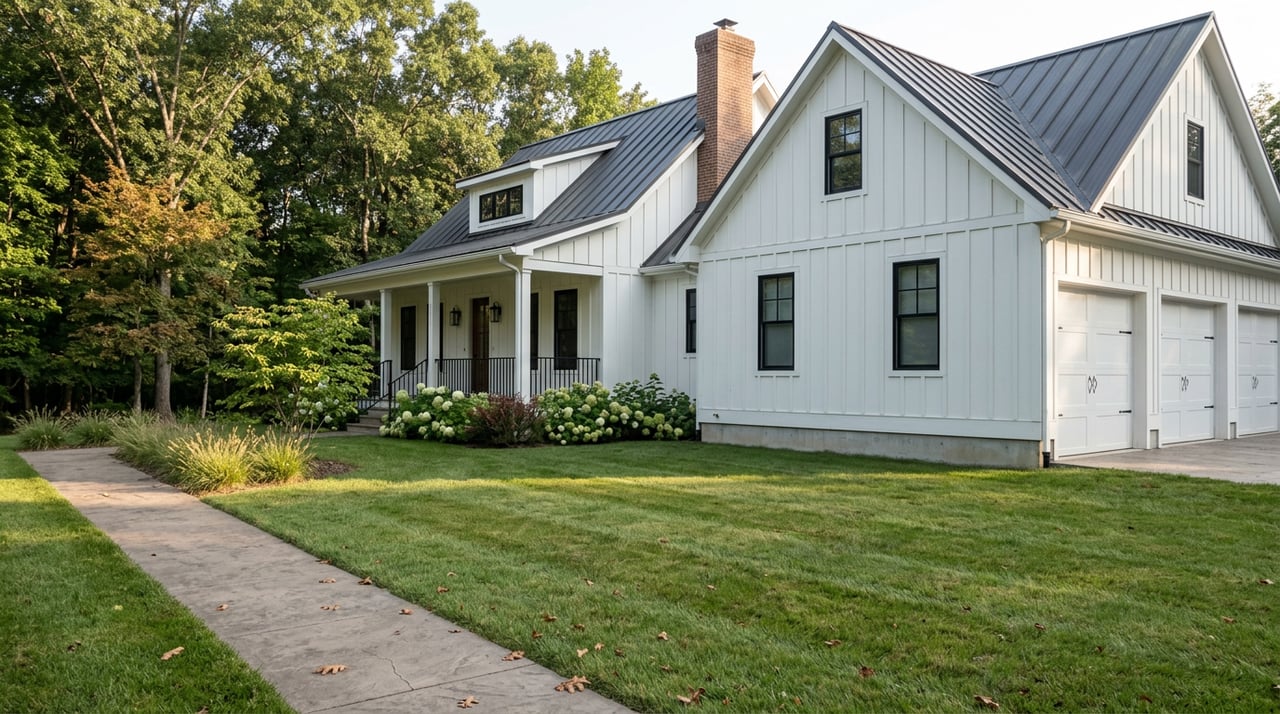
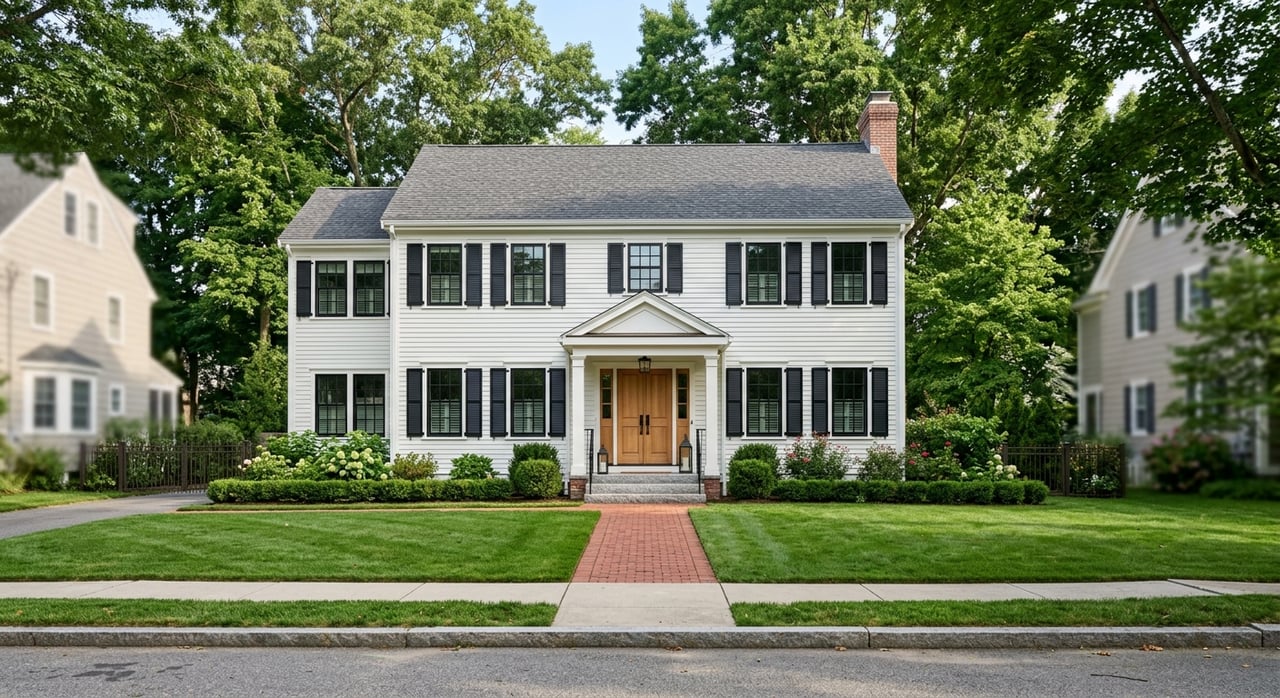
At the same time, the same housing plan notes that local homes range from modest 1950s and 1960s capes and ranches to larger farmhouses, stately Victorians, and large new modern homes. That mix helps explain why Needham can appeal to very different buyers, from those looking for an older home with future update potential to those focused on newer construction or expanded homes.
The housing plan also says that much of the newer supply has come from multifamily projects near transit or through teardown-and-rebuild activity. If you are comparing different parts of town, that is an important detail. It suggests that housing choices may vary significantly depending on whether you are near a transit-oriented area, a traditional residential neighborhood, or a location where rebuilding has reshaped parts of the streetscape.
What buyers should know about the market
Needham is a high-price market, and that affects both expectations and strategy. The town assessor reports that the average residential single-family assessed value reached $1,464,398 for FY2025, based on the town’s values compared to last year page.
The town’s housing plan also describes the private market as tight, even though 11.85% of year-round housing units are on the Subsidized Housing Inventory, which is above the state’s 10% Chapter 40B threshold, according to the town’s Chapter 40B information. For buyers, the practical takeaway is that pricing and competition can still be very real, especially for well-located homes and updated properties.
This is where a builder-informed lens can be especially useful. In a market like Needham, some buyers may be weighing not just the house as it stands today, but also whether an older home has strong renovation potential, whether a larger rebuild nearby affects value expectations, or whether a property near transit offers a different lifestyle tradeoff than a more traditional neighborhood setting.
How to think about neighborhoods in Needham
Rather than looking for one perfect label for each area, it is often more useful to evaluate Needham by lifestyle patterns. Some buyers prioritize walkability to Needham Center. Others want access to a commuter rail stop, a park system, or a housing type that is more likely to show up near mixed-use areas.
A practical way to compare areas is to focus on a few questions:
- How important is commuter rail access to your weekly routine?
- Do you want a more traditional residential setting or proximity to a local commercial node?
- Are you looking for an older home, a newer home, or a property with renovation potential?
- How much do parks, trails, and conservation land matter to your daily life?
- Would a condo or multifamily option near transit fit your goals better than a detached home?
These questions can help you narrow your search in a way that matches your actual lifestyle, not just a map.
Finding the right fit in Needham
Needham offers a layered version of suburban living. You have a defined downtown, several commercial and transit-oriented nodes, substantial open space, multiple commuter rail stops, and housing that ranges from modest older homes to larger newer builds.
If you are trying to decide where you fit within Needham, the key is to match the town’s different areas to your routines, budget, and long-term plans. And if you are evaluating an older home, new construction, or a property with redevelopment potential, having guidance that includes both market knowledge and construction awareness can help you make a more confident decision.
If you want help comparing homes, neighborhoods, or future potential in Needham, connect with Barber Real Estate to schedule a free consultation.
FAQs
What is everyday life like in Needham, MA?
- Everyday life in Needham combines residential neighborhoods, local commercial areas, commuter access, parks, and open space, with town survey data showing very positive resident perceptions of daytime and property-crime safety.
What are the main commercial areas in Needham, MA?
- The main commercial and mixed-use areas highlighted by the town include Needham Center, Needham Heights, Needham Junction, and Needham Crossing.
How do you get around from Needham, MA?
- Needham has four commuter rail stops, access to MBTA Bus Route 59, and road connections via Route 95/128 Exits 33 and 35, along with local planning support for walking and biking.
What types of homes are common in Needham, MA?
- Needham’s housing stock is mostly single-family detached homes, but the town also has multifamily housing near transit and a mix of capes, ranches, farmhouses, Victorians, and newer modern homes.
Are there parks and outdoor spaces in Needham, MA?
- Yes, Needham includes parks such as Memorial Park, DeFazio Park, and Walker-Gordon, along with larger conservation land like Ridge Hill Reservation.
What should buyers know about the Needham, MA housing market?
- Buyers should know that Needham is a high-price, tight housing market where it helps to compare not only location and layout, but also renovation potential, rebuild activity, and housing options near transit.